Nervous about your work headshot? What actually helps, and what to wear
 Nirmesh Vadera
6 min read
In this guide
- Why headshots make people nervous
- What happens in the session, step by step
- Five things that actually help with nerves
- Posture, hands and expression: what I'll ask you to do
- Everyone thinks one side is better
- What to wear for a professional headshot
- A Regina winter note
- The day before: a short checklist
- What if you really don't want your photo taken?
- Frequently asked questions
If you have a work headshot coming up and you are dreading it, you are in good company.
In October 2026 we read 283 Google reviews of photographers across Regina, Saskatoon, Winnipeg, Calgary and Edmonton. In the 86 reviews about headshots and corporate work, 43% talked about nerves or feeling comfortable. In the 49 reviews that were only about headshots, the word “comfortable” came up 21 times. The word “beautiful” came up once.
43%
of headshot and corporate reviews we read talked about nerves or feeling comfortable
Source: Vadera Photography review research, October 2026
That tells you what people actually worry about. Not the lens. Themselves.
This guide is for the person standing in front of the camera. It covers what happens in the session, what helps with nerves, and what to wear.
Why headshots make people nervous
There are a few real reasons, and none of them are silly.
The photo is public. It goes on the company website or LinkedIn, next to your name. One employee writing to the advice column Ask a Manager put it simply: they would rather have no photo than a bad one. (Ask a Manager, 2017)
You don't get to choose. In some photo days, the photographer or marketing picks the shot. You see it when it is already live.
Posing feels awkward. Most of us don't know what to do with our hands, our chin or our smile when someone is pointing a camera at us.
It happens at work. Your colleagues are waiting outside the room.
The good news: a good session fixes almost all of this.
What happens in the session, step by step
Here is how a headshot with me works. Other good photographers work in a similar way.
- You walk in. The backdrop and lights are already set up in a meeting room. Nothing to wait for.
- We talk for a minute. Where the photo will go, and whether you wear glasses every day.
- I tell you where to stand. Feet, shoulders, chin. You do not have to know how to pose. That is my job.
- We take a few frames, then adjust. Small changes: turn a little, drop your shoulder, breathe out.
- You look at the back of the camera. If you want, you can see how it is going.
- You are done in 5 to 7 minutes. Back to your desk.
- You pick your own photo. Everyone gets a private online gallery and chooses their favourite. If a shot isn't right, I reshoot it free.
The fact that you choose the final photo takes away most of the fear. Nothing goes on the website that you didn't pick.
Five things that actually help with nerves
- Breathe out just before the shot. A slow breath out drops your shoulders. Tense shoulders are the most common thing I fix.
- Push your face forward a little. It feels strange. It looks natural on camera and defines your jawline.
- Think of someone you like. A real smile reaches the eyes. A "say cheese" smile doesn't.
- Don't try to hold one expression. Let it change between frames. We pick the best one later.
- Ask to see a frame early. Seeing that it already looks fine calms most people down straight away.
One of my own Google reviews says my approach made the client feel "comfortable and at ease throughout the entire process". That matters more to me than any single photo.
Posture, hands and expression: what I'll ask you to do
You don't need to practise. But it helps to know what's coming, so nothing feels strange on the day.
Posture. I'll ask you to stand or sit tall, then turn your body slightly away from the camera and your face back towards it. It's more flattering than standing square on.
Hands. For most headshots, your hands aren't in the photo at all. If they are, I'll tell you where to put them.
Chin. I'll often ask you to bring your chin forward and slightly down. It feels odd. On camera, it looks confident.
Eyes. Look at the lens, not the screen or me. A small trick: look just past the lens, then back to it, right before the shot.
Expression. We'll usually try three:
| Expression | Good for |
|---|---|
| Soft smile, lips closed | Professional services, law, finance, healthcare |
| Full smile | Customer-facing roles, real estate, hospitality |
| Neutral, friendly | Speaker bios, press, formal documents |
You'll pick the one you like from your gallery.
Everyone thinks one side is better
Most people believe they have a "good side". Sometimes they're right. Most faces are a little asymmetric, and that's normal.
Tell me if you have a side you prefer. We'll shoot both, and you can see the difference on the back of the camera. Often people end up picking the side they didn't expect.
What to wear for a professional headshot
The rule is simple: wear what you would wear to an important meeting, in solid colours, with a layer.
| Wear | Avoid |
|---|---|
| Solid colours: navy, grey, charcoal, deep green, burgundy | Thin stripes, small checks, tight patterns (they shimmer on screen) |
| A layer: blazer, cardigan or jacket | Big logos and printed slogans |
| Clothes that fit well at the shoulders | Very bright white or neon, which can glow |
| A neckline you are comfortable in | Anything you keep adjusting |
| What you normally wear to work, if that is scrubs or a uniform | A totally new outfit you have never worn |
Colour tip: if your company website has a light background, mid to dark clothes stand out well. Ask whoever organised the day if there is a colour to avoid.
Bring a second top. If you are not sure, bring one other option. Changing takes a minute.
Glasses
If you wear glasses every day, wear them in your photo. People should recognise you when they meet you.
Glare is easy to fix on the day. I adjust the light angle, and sometimes ask you to tilt your glasses down a few millimetres. Anything left is cleaned up in editing.

Scrubs, white coats and uniforms
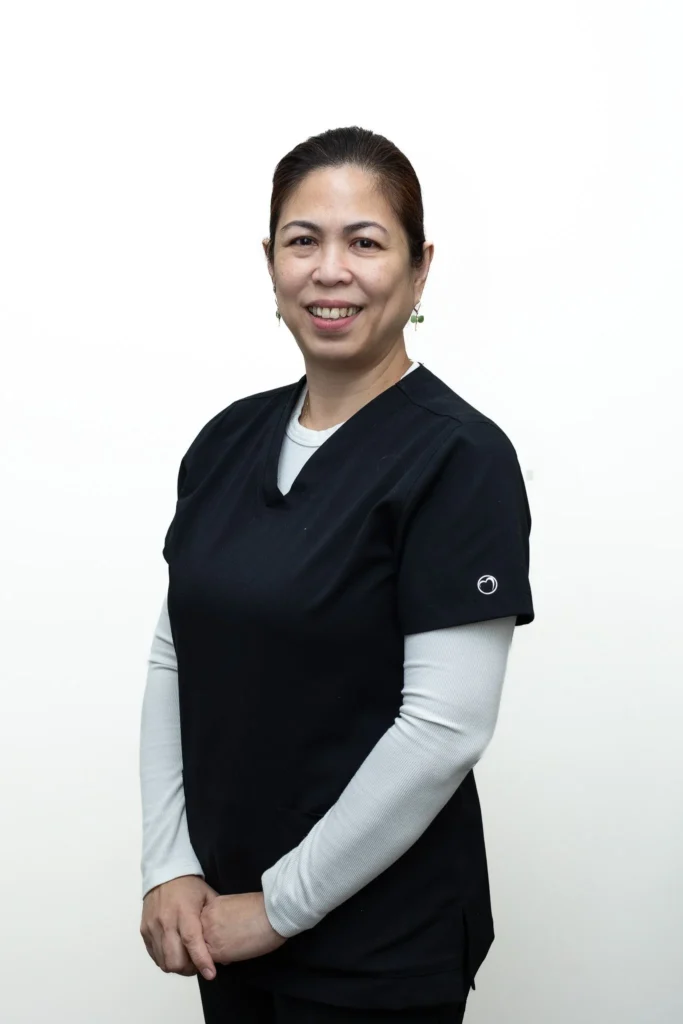
If you wear scrubs or a uniform at work, wearing them in your headshot is often the right call. It tells patients and clients who you are. Make sure they are clean and pressed, and that your name badge is either straight or off.
I have a full guide on headshots for clinic and pharmacy teams.
Hair, beards and makeup
- Get a haircut a week before, not the day before.
- Beards: trim a few days before so it looks natural.
- Makeup: your normal everyday look. Matte works better than shiny.
- Bring a comb and lip balm. That's it.
A Regina winter note
From November to March, the weather is the enemy of a good headshot.
- Carry your blazer in. Don't wear it under a parka. It will crease.
- Hat hair is real. Bring a comb, or wait 10 minutes after coming inside.
- Cold makes faces red. If you have just walked in from minus 25, sit down for a few minutes first. Red cheeks and a red nose settle down quickly.
- Dry lips crack. Lip balm, again.
The day before: a short checklist
- Pick your outfit and a backup. Check it fits at the shoulders.
- Clean your glasses.
- Sleep. It really shows.
- Drink water.
- Know your time slot, and arrive 5 minutes early.
What if you really don't want your photo taken?
Some people would rather not be on the website at all. The reasons are real: privacy, safety, or simply hating photos of themselves.
If that is you, talk to whoever organised the day before the shoot, not on the day. Ask where the photo will be used. Many companies will offer you the session and let you keep the photo for yourself, without putting it on the public site.
If you are the one organising, my guide to running a team headshot day has a section on asking staff the right way.
Frequently asked questions
How long does a headshot take?
About 5 to 7 minutes per person at a team session. A single headshot session is a little longer, since we try more than one look.
Should I smile with teeth?
Try both. We will take frames with and without, and you choose.
What colour should I wear for a headshot?
Solid, mid to dark colours like navy, grey or deep green usually work best. Avoid tight patterns.
Can I see my photos before they are used?
Yes. With me, everyone gets a private gallery and picks their own photo.
What if I hate my photo?
Tell me. If a shot isn’t right, I reshoot it free.
Sources
- Vadera Photography review research, October 2026: 283 Google reviews of 59 photography businesses in Regina, Saskatoon, Winnipeg, Calgary and Edmonton. Keyword counts, so read the percentages as rough sizes.
- Ask a Manager: "I hate my headshot" (2017)
- Vadera Photography Google reviews, October 2026.
More on prices: How much do corporate headshots cost in Regina?