Headshots for clinics and pharmacy teams: scrubs, white coats and a busy front desk
 Nirmesh Vadera
7 min read

In this guide
- Key takeaways
- 1. Pick a time that doesn't compete with patients
- 2. Decide what people wear
- 3. Protect patient privacy
- 4. Make it easy for staff
- 5. Plan for new staff and locums
- 6. Use the photos everywhere
- What changes for pharmacies, dental and vet clinics?
- Which workplace photos help a clinic?
- How much do clinic team photos cost?
- How do you handle more than one clinic location?
- What should the clinic manager check the day before?
- What else do clinics ask about team photos?
Key takeaways
- Time5 to 7 minutes per person, so a team of 10 takes about an hour plus setup.
- HoursVadera books Monday to Saturday, 8 am to 7 pm, by appointment.
- Cost$79 per person for 8 or more; $149 for a single new hire or locum.
- DeliveryProofs in 2 business days, final retouched photos in 3.
- PrivacyCanada’s Privacy Commissioner says staff consent should be clear, informed and voluntary.
This is for you if
- Medical, dental and physio clinics
- Pharmacies with a counter that can’t close
- Clinics with new staff and locums to match
Not the right fit if
- Photos with patients in them
- Clinics that want to visit a studio instead
A clinic team page does a real job. Before a first appointment, some patients look up who they're going to see. A friendly, current photo of the person behind the desk or in the exam room can make that first visit a little less stressful.
But clinics are hard places to organise photos. The front desk can't close. Appointments run over. People work different shifts. And nobody wants a patient walking into the background.
I photograph clinic and health teams, and the same few things decide whether the day goes smoothly. This guide covers how to plan it so the clinic keeps running.
The same plan works for all of them. The details change a little.
Pick a time that doesn't compete with patients
This is the most important decision.
| Option | Best for | Watch out for |
|---|---|---|
| Before opening (e.g. 7:30–9:00) | Clinics where most staff start at the same time | People arriving rushed |
| Over lunch, if the clinic closes | Short teams where the clinic actually closes | Short window; book tight slots |
| A slow afternoon | Clinics that know their quiet days | Patients still in the building |
| A staff training day | Getting everyone in with no patients | Book early, these days are rare |
My hours are Monday to Saturday, 8 am to 7 pm, by appointment. If your clinic's quiet time is outside that, ask.
- Plan 5 to 7 minutes per person. A team of 10 takes about an hour plus setup. A team of 20 fits in a morning.
- Slot people around their work. Front desk staff can go one at a time while others cover. Practitioners can go between patients, if the schedule allows a 10-minute gap.
A sample schedule for a clinic of 12
| Time | Who | Note |
|---|---|---|
| 7:15–7:45 | Photographer sets up in the staff room | Before staff arrive |
| 7:45–8:30 | Physicians and pharmacists (6 people) | Before the first appointments |
| 8:30–8:45 | Buffer | Late arrivals |
| 8:45–9:30 | Nurses and assistants, one at a time (4 people) | Front desk stays covered |
| 9:30–9:45 | Front desk staff (2 people), one at a time | Others cover the phones |
| 9:45 | Photographer packs down | — |
My booking hours start at 8 am. If you need an earlier start like this, ask when you book.
Decide what people wear
This is where clinics often end up with a messy team page. One doctor in a suit, one in scrubs, one in a sweater.
Pick a rule per role, and stick to it:
| Role | Common choice |
|---|---|
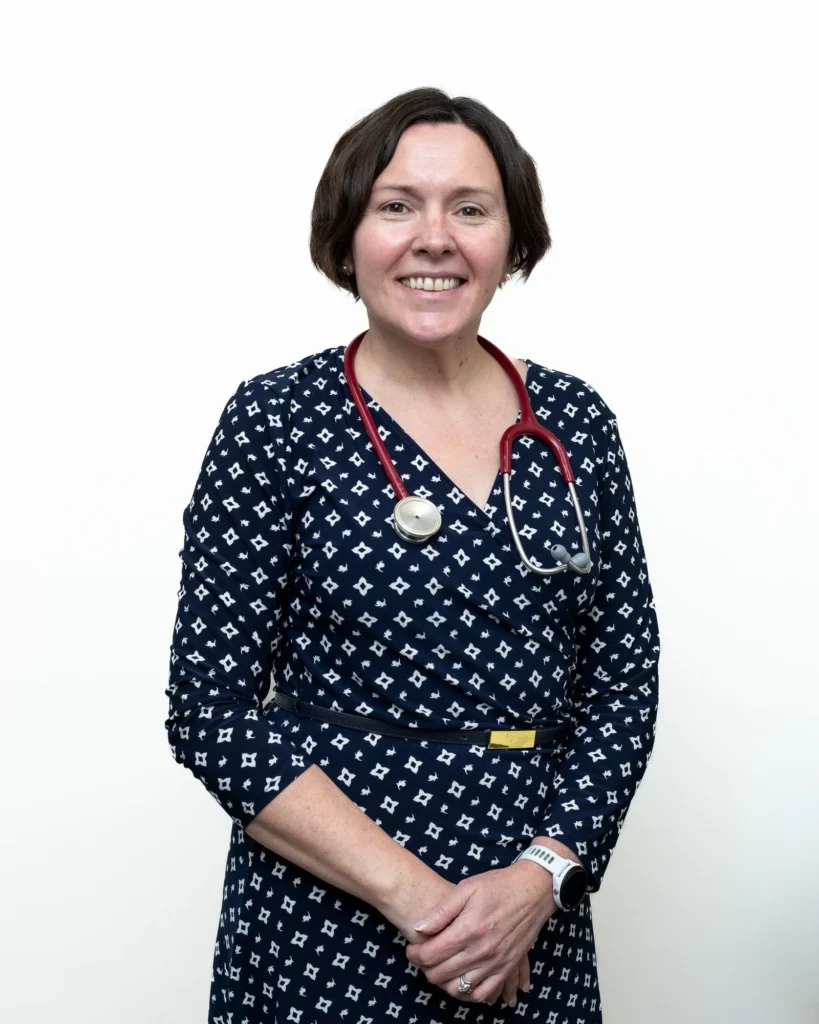
| Physicians, dentists, pharmacists | White coat over business clothes, or what they wear with patients |
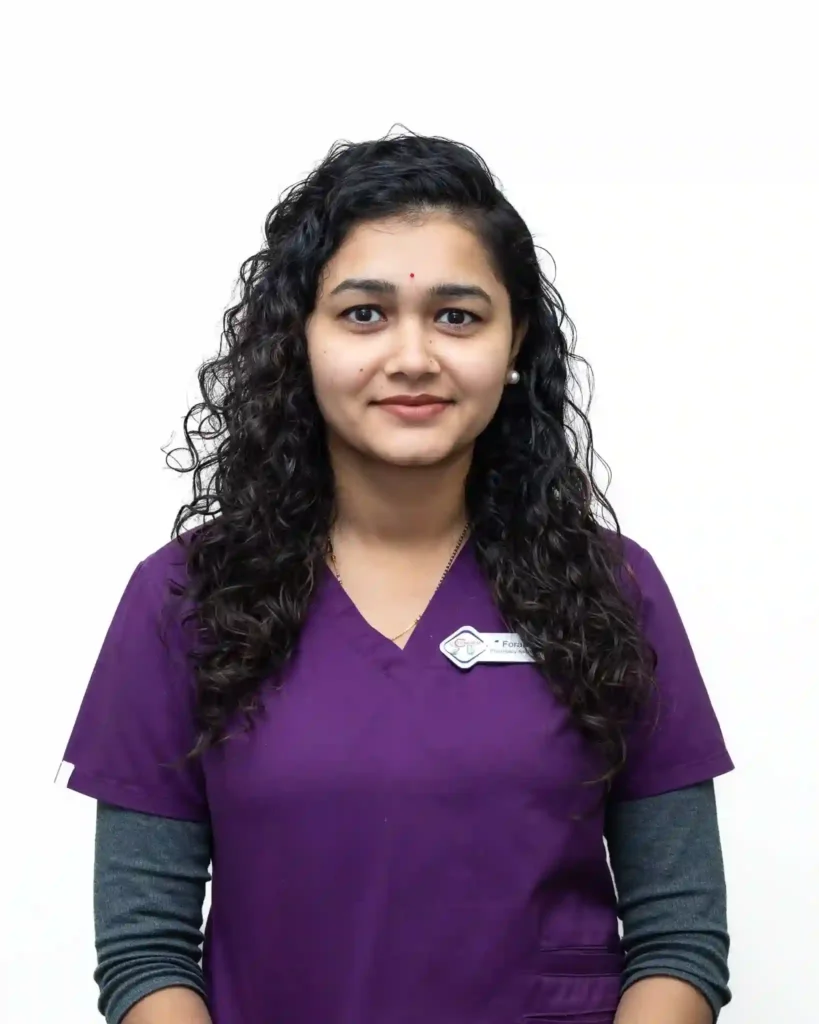
| Nurses, hygienists, assistants, technicians | Clean, pressed scrubs |
| Front desk and admin | Business casual, or your clinic uniform |
| Owners and managers | Business, or the same as their clinical role |
The goal is that patients recognise people when they walk in. If your pharmacists wear white coats at the counter, photograph them in white coats.
A few practical tips:
- Scrubs: clean and pressed. Bring a spare top in case of a stain.
- White coats: pressed, with nothing in the pockets. Pens and phones show.
- Name badges: straight, or off. Decide as a team.
- Stethoscopes: around the neck can look natural for physicians. Decide as a team, so it's consistent.
- Glasses: if people wear them every day, they should wear them in the photo.
My guide on what to wear for a work headshot has more detail you can send to staff.
Protect patient privacy
This matters more in a clinic than anywhere else.
For headshots: the backdrop takes care of most of it. I set up a portable backdrop in a staff room or an empty office, so nothing behind the person is visible.
For any wider photos, like the reception area or an exam room:
- Shoot before opening or after closing, with no patients in the building.
- Turn screens off, or face them away.
- Clear charts, files and papers from desks and counters.
- Wipe whiteboards that show names or schedules.
- Check reflections in windows and glass.
- Take name lists off walls.
If any patient is in a photo, even in the background, don't use it. Ask the photographer to delete it.
Make it easy for staff
Health workers are often more camera-shy than other teams. They're used to looking after other people, not being looked at.
What helps:
- Tell them where the photo will go. Clinic website? Google profile? Booking system? Be specific.
- Let them choose their photo. With me, everyone picks their own from a private gallery.
- Make it short. 5 to 7 minutes, then back to work.
- Send the checklist. The free team headshot day checklist has a staff message you can adapt.
- Offer an option for people who say no. Some staff won't want their face online, often for safety or privacy reasons. Respect it. A name and role without a photo is fine.
Canada's federal privacy regulator says employees have a right to know how their information is collected and used, and that consent should be clear, informed and voluntary. (Office of the Privacy Commissioner of Canada) That's a good standard for staff photos on a public page, too. The same applies if anyone suggests AI headshots instead. I compare the two in AI headshots or a photographer?
Plan for new staff and locums
Clinics change staff often: new hires, locums, students, people coming back from leave. Every one of them breaks the matching team page.
The fix:
- Keep one backdrop, one light, one crop. I keep the setup on file.
- Book new staff photos in their first month. A short single session in the same setup.
- Send your current photos to any new photographer. I can match two or three existing headshots.
A photographer who writes about this recommends the same thing: one solid background, one lighting style, one crop, and a written record of the setup. (M Hamilton Visuals)
Use the photos everywhere
Once you have them, put them to work:
| Where | What to use |
|---|---|
| Clinic website team page | Each person's headshot, name and role |
| Google Business Profile | A team photo, and practitioners if you list them |
| Online booking system | Practitioner headshots, so patients know who they're booking with |
| Staff can use their own headshot on their personal profile | |
| Printed materials | Brochures, welcome packs, signage |
A note on advertising rules: if you're a regulated health profession, your college may have rules about advertising. A name, role and photo is usually straightforward. If you plan to add anything else, like patient testimonials, check your college's rules first.
With clinic teams, I set up in a staff room or an empty office, keep the backdrop and lights the same for everyone, and slot people around their patients. Each person takes 5 to 7 minutes, so nobody is away from the front desk or their next patient for long.
What changes for pharmacies, dental and vet clinics?
- Pharmacies. The counter is always open, so slot pharmacists and technicians one at a time between customers, or before opening. White coats or your uniform, depending on what customers see.
- Dental offices. Hygienists and assistants often wear scrubs, dentists sometimes a white coat. Decide as a team. Masks off for the photo, of course.
- Physiotherapy and chiropractic. Many practitioners wear branded polos or athletic wear. That's fine. It's what patients see.
- Veterinary clinics. Staff often want a photo with an animal. It's lovely, but plan it carefully. Keep it to a separate, optional photo, so the main headshots still match.
Which workplace photos help a clinic?
Headshots are the start. A few photos of the clinic itself help new patients feel at ease before they arrive:
- The front entrance and sign, so people can find you.
- The reception and waiting area, empty and tidy.
- A treatment or exam room, with no patient information visible.
- A practitioner with a team member, posed as if with a patient.
- The team together.
All of these should be taken with no patients in the building. My half-day coverage ($450, up to 4 hours) is for this kind of workplace photo.
How much do clinic team photos cost?
| What you book | Price (CAD, plus PST) | Best for |
|---|---|---|
| Team headshots, 8 people or more | $79 per person | The whole team, 8 or more |
| Single headshot | $149, with 2–3 retouched photos | New hires and locums |
| Half day of workplace photos (up to 4 hours) | $450 | Reception and treatment room photos |
| Travel to Regina, White City, Emerald Park, Pilot Butte, Balgonie, Lumsden and Moose Jaw | Free | All clinics in these towns |
Proofs come back in 2 business days, final retouched photos in 3. If a shot isn't right, I reshoot it free. Full details on team headshot days.
For the full step-by-step plan for any team, see how to run a team headshot day.
How do you handle more than one clinic location?
If you have two or more locations, consistency matters even more. Patients notice when one clinic's team page looks different from another's.
- Use the same setup at every location. Same backdrop, light and crop. I can bring the same setup to each one.
- Book locations close together in time, ideally in the same week.
- Name files the same way everywhere, for example "location-firstname-lastname".
What should the clinic manager check the day before?
- The room is booked, with a power outlet and a door that closes.
- Every staff member has a time slot in their calendar.
- The front desk has cover planned for each person's slot.
- The "what to wear" note has gone out, with the rule for each role.
- Screens, charts and whiteboards in any room being photographed will be cleared.
- You know who said no to a public photo, and the photographer knows too.
What else do clinics ask about team photos?
Should clinic staff wear scrubs in their headshots?
If that’s what patients see them in, yes. Pick one rule per role so the team page matches.
How do we take photos without closing the clinic?
Shoot before opening, over a closed lunch, or on a quiet afternoon, with each person taking 5 to 7 minutes.
How do we protect patient privacy during a photo shoot?
Use a backdrop for headshots. For wider photos, shoot with no patients present, turn off screens, and clear charts and whiteboards.
Can you match our existing team photos?
Yes. Send two or three current headshots and I match the backdrop, light and crop.